sana › Foods & Pantry › Manuka Honey
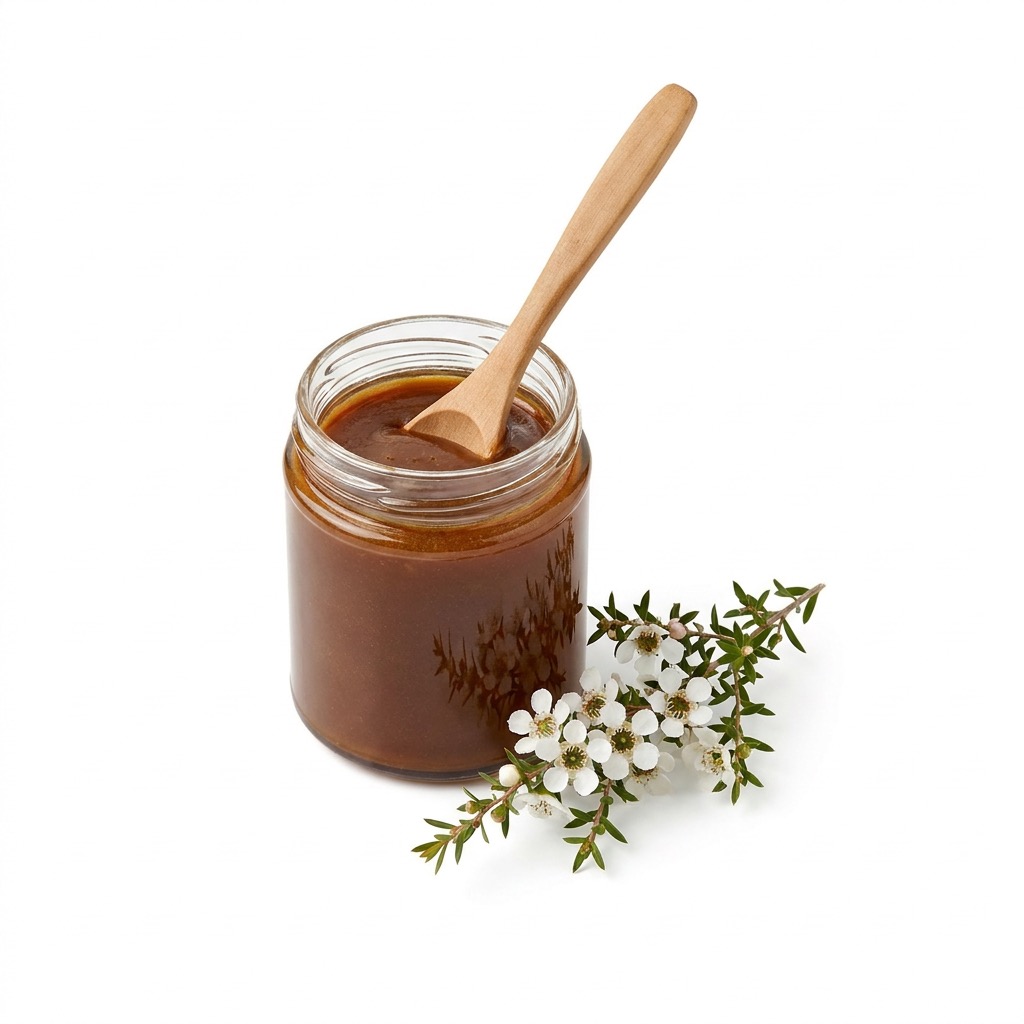
Manuka Honey · Leptospermum scoparium
Foods & Pantry
Manuka Honey
Leptospermum scoparium
The manuka tree grows only in New Zealand and southeastern Australia, which is why the honey cannot be produced anywhere else.
Benefits
its thick texture coats the throat and provides soothing comfort during occasional irritation
medical-grade Manuka honey is used in specific dressings because its high sugar concentration and methylglyoxal content help create conditions that discourage microbial growth
naturally occurring phenolic compounds help protect cells from oxidative stress
its carbohydrates provide readily available energy in small amounts
They will see the photograph and what it helps with.
Why they work
a naturally occurring compound associated with Manuka honey's antimicrobial activity; concentrations vary by product
all honey fights microbes with hydrogen peroxide, but wound fluid contains an enzyme that destroys it; Manuka's methylglyoxal survives that enzyme, which is why it is the honey used in dressings
draws water away from microbial cells and contributes to honey's protective activity
makes it difficult for many microorganisms to grow when the honey remains properly stored
support antioxidant activity and contribute to Manuka honey's distinctive color and flavor
helps coat the throat and maintain contact when used as a food
How to use it for the specific effect
take a small spoonful by itself or mix it into warm, not boiling, water or tea
use it as a sweetener in yogurt, oatmeal, smoothies, or dressings
use only sterile, medical-grade Manuka honey in a dressing designed for wound management; regular food-grade honey is not a substitute
treat it as a sweetener and keep portions moderate because it is still a concentrated source of sugar
Key active compounds
the principal marker used to describe Manuka honey's characteristic antimicrobial activity
a precursor that can convert into MGO as the honey matures
produced by honey's own enzymes and active in the jar, though wound fluid breaks it down
antioxidant compounds naturally present in honey
primarily fructose and glucose, providing its concentrated sweetness and energy
Caution
never give honey to babies because of the risk of infant botulism.
How we chose it to buy online
We check every product so you don't have to. A manuka honey only makes our list if:
- Correct botanical source — identifies Manuka honey as coming from Leptospermum scoparium nectar
- Traceable origin — provides the producer, harvest location, batch number, and country of origin
- Verified potency grading — uses a recognized MGO or UMF rating rather than vague terms such as “active” or “strong”
- Authenticity testing — supported by independent testing for Manuka markers, adulteration, and syrup dilution
- Raw or minimally processed — clearly states whether the honey has been heated, filtered, or blended with other honey
- Medical-grade distinction — products intended for wounds are sterile, purpose-labeled, and separate from food-grade honey
If no product meets these standards, we don't list one. No exceptions for affiliates.
See our picks
Some of these are affiliate links. If you buy through one we may earn a commission, at no extra cost to you.