sana › Roots & Spices › Saffron
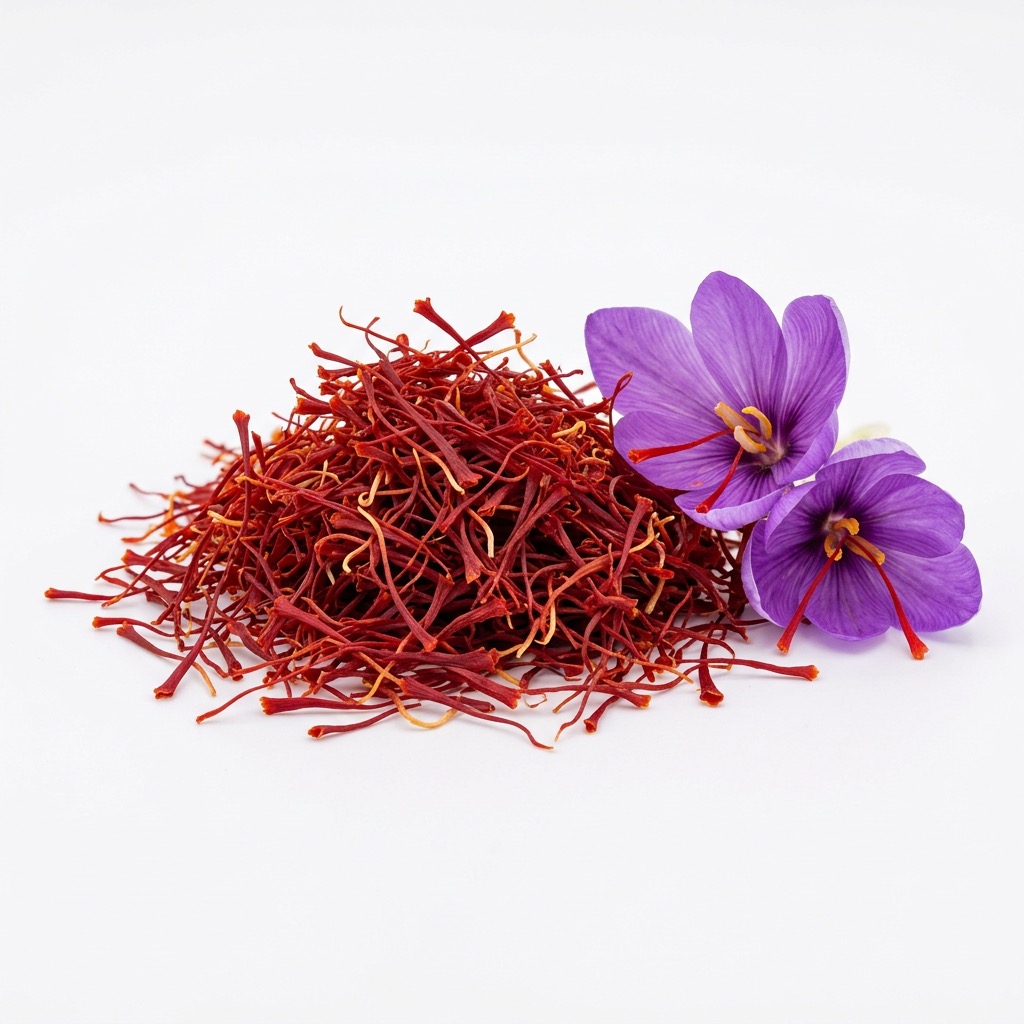
Saffron · Crocus sativus
Roots & Spices
Saffron
Crocus sativus
The red threads inside a purple flower — saffron comes from the tiny red parts of the saffron crocus. It takes many flowers to make a small amount, which is why saffron is one of the world's most valuable spices.
Benefits
saffron's natural compounds help support the brain pathways involved in mood and emotional balance
saffron may help ease occasional mood changes and discomfort around the menstrual cycle
its gentle bitter taste can help support normal appetite and digestion
saffron may support interest and pleasure when low mood or everyday stress affects sexual well-being
They will see the photograph and what it helps with.
Why they work
a red plant compound that gives saffron much of its color and helps support the brain and nervous system
the fragrant oil that gives saffron its honey-like smell and supports a calm, balanced mood
a bitter compound that gives saffron its taste and supports normal digestion
saffron's compounds help the body manage the chemical signals linked with mood, pleasure, and emotional balance
How to use it for the specific effect
steep a pinch of threads in warm milk or water for fifteen minutes before drinking, so the color and scent come out into the liquid
use saffron in food or a clearly measured preparation during the days when discomfort usually appears
add a small amount to a meal or prepare a light saffron tea
soak the threads in a little warm water before adding them to the dish. This helps release their color and flavor
Key active compounds
the red compound that gives saffron its color and supports the brain
the fragrant compound that gives saffron its warm smell and supports a balanced mood
the bitter compound that gives saffron its taste
a plant compound found in saffron that helps protect cells
Caution
use saffron only in normal food amounts. Avoid large amounts and concentrated saffron extracts because they may affect the uterus
large amounts can cause dizziness, nausea, or other harmful effects. Choose a product with a clear serving size and do not exceed it
How we chose it to buy online
We check every product so you don't have to. A saffron only makes our list if:
- Correct plant — clearly labeled as Crocus sativus
- Grade and category both named — the red stigma only, with no yellow style attached, and an ISO 3632 category stated. Grade names like Super Negin and Sargol are trade terms rather than a standard, so a category is what can actually be checked
- Strong natural color and smell — genuine saffron has a deep red color and a warm, honey-like scent
- No hidden fillers — the product should not contain coloring, turmeric, paprika, or other cheaper spices
- Clear origin — the package should say where the saffron was grown and packed
- Third-party tested — checked for plant identity, added coloring, pesticides, heavy metals, and other contamination
If no product meets these standards, we don't list one. No exceptions for affiliates.
See our picks
Some of these are affiliate links. If you buy through one we may earn a commission, at no extra cost to you.