sana › Roots & Spices › Cinnamon
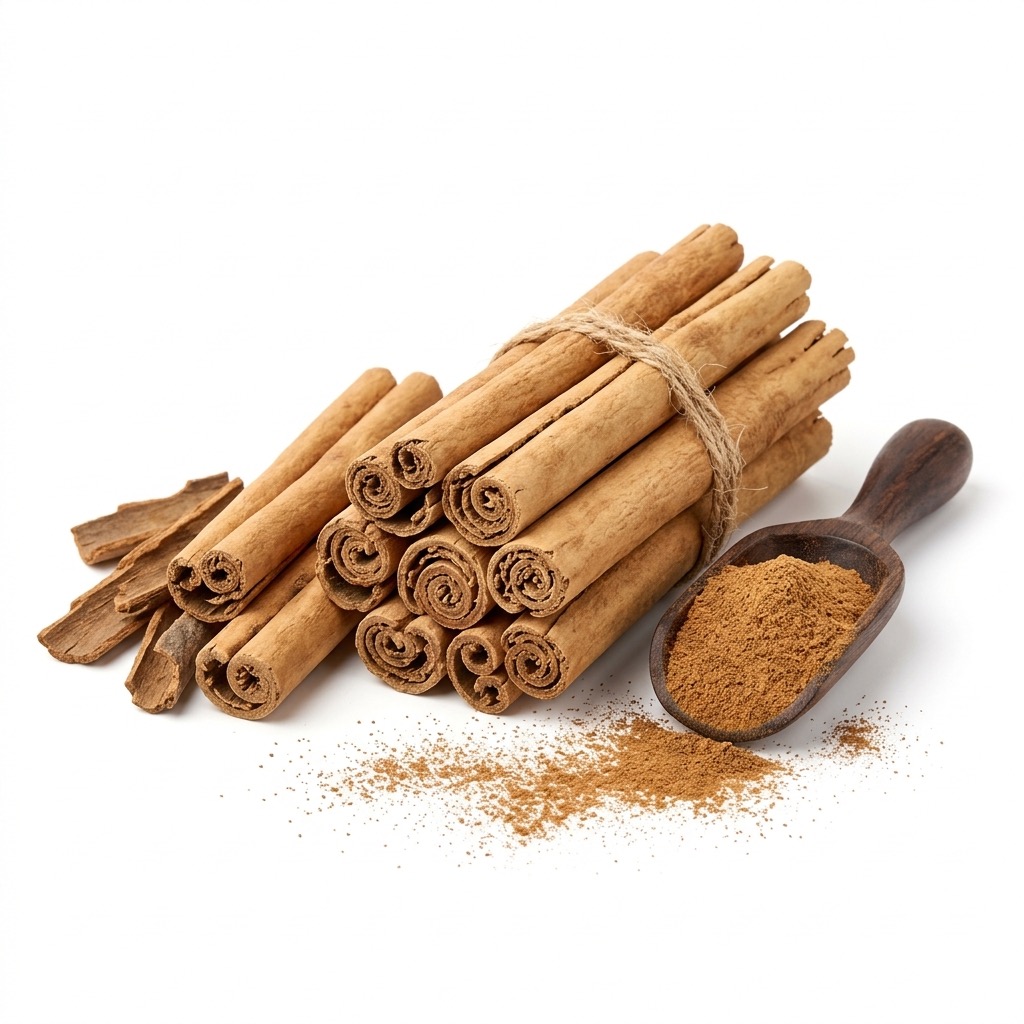
Cinnamon · Cinnamomum verum
Roots & Spices
Cinnamon
Cinnamomum verum
Cinnamon is not one plant but several. What sits in most American kitchens is cassia. The true cinnamon is Ceylon, and it costs more. They taste alike, but cassia carries coumarin, a compound that stresses the liver in large daily amounts, and Ceylon has almost none.
Benefits
cinnamon compounds influence carbohydrate-digesting enzymes and insulin-signaling pathways
its aromatic oils help ease occasional gas, bloating, and post-meal heaviness
cinnamon polyphenols help protect cells from oxidative stress
its strong aroma can make foods taste sweeter without adding sweeteners
They will see the photograph and what it helps with.
Why they work
the main aromatic compound in cinnamon; it contributes to the spice's flavor and influences digestive and metabolic signaling
plant compounds that support antioxidant defenses and help regulate inflammatory pathways
condensed tannins that interact with carbohydrate-digesting enzymes and cellular glucose-signaling pathways
aromatic compounds that stimulate digestive secretions and contribute to cinnamon's warming sensation
How to use it for the specific effect
add ground cinnamon to oatmeal, yogurt, fruit, tea, coffee, or cooked dishes
include a small culinary amount with a carbohydrate-containing meal
prepare a mild cinnamon infusion using a small piece of cinnamon stick and hot water
choose measured culinary portions instead of concentrated capsules or essential oil
Key active compounds
the primary volatile compound responsible for cinnamon's characteristic aroma and warming flavor
polyphenols associated with antioxidant and carbohydrate-enzyme activity
an aromatic acid contributing to cinnamon's polyphenol profile
naturally present in higher amounts in cassia cinnamon, which is why the species matters
present in smaller amounts and contributing to cinnamon's aromatic and cleansing properties
Caution
an adult passes it at about two grams of cassia and a child at about half a gram, so take Ceylon and never give cinnamon to a child as a daily remedy.
How we chose it to buy online
We check every product so you don't have to. A cinnamon only makes our list if:
- Correct botanical identity — clearly identifies the species, such as Ceylon cinnamon, Cinnamomum verum, or cassia cinnamon, Cinnamomum cassia
- Species transparency — states the species, because coumarin content differs substantially between Ceylon and cassia
- Whole sticks when possible — whole cinnamon holds its aromatic oils; old pre-ground powder has lost them
- Fresh and protected packaging — sealed packaging limits exposure to moisture, light, and oxidation
- No undisclosed additives — contains cinnamon without added sugar, flavoring oils, fillers, or coloring agents
- Third-party tested — independently tested for identity, coumarin, pesticides, heavy metals, mold, and microbial contamination
If no product meets these standards, we don't list one. No exceptions for affiliates.
See our picks
Some of these are affiliate links. If you buy through one we may earn a commission, at no extra cost to you.