sana › Fruits & Vegetables › Okra
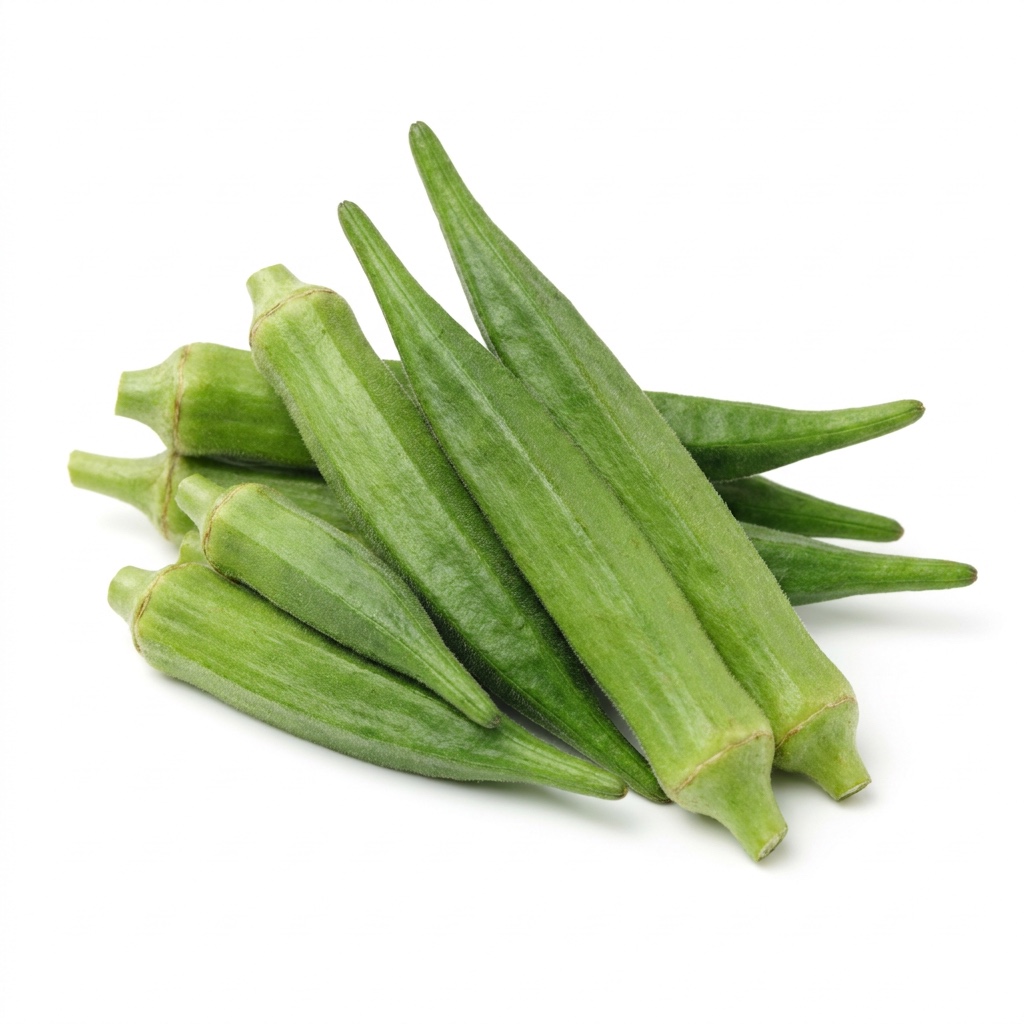
Okra · Abelmoschus esculentus
Fruits & Vegetables
Okra
Abelmoschus esculentus
Okra's slippery gel strips microplastics out of polluted water, and it is used for that job in place of the synthetic chemicals normally used to do it.
Benefits
its soluble fiber and natural mucilage add bulk and help food move through the digestive tract
fiber and mucilage slow the digestion and absorption of carbohydrates in a meal
fiber, potassium, and plant polyphenols contribute to healthy blood-vessel and cholesterol regulation
okra supplies folate, vitamin C, vitamin K, magnesium, and carotenoids in a low-calorie vegetable
They will see the photograph and what it helps with.
Why they work
gel-forming carbohydrates that add viscosity to the digestive tract, supporting regularity and slowing carbohydrate absorption
plant compounds that help protect cells from oxidative stress and support balanced inflammatory signaling
minerals involved in normal muscle, nerve, and cardiovascular function
nutrients supporting cell production, connective tissue, and everyday immune function
plant pigments that contribute to antioxidant protection and okra's green color
How to use it for the specific effect
steam, sauté, roast, or add okra to soups and stews
eat whole okra with carbohydrate-containing meals as a fiber-rich vegetable, rather than relying on okra water alone
cook it quickly over higher heat, roast it, or add an acidic ingredient such as tomato or lemon
simmer okra in soups, stews, or sauces, where its natural mucilage helps thicken the dish
eat fresh or frozen okra rather than heavily fried or highly salted preparations
Key active compounds
gel-forming plant carbohydrates supporting digestion and carbohydrate absorption
flavonoids contributing to okra's antioxidant profile
a B vitamin needed for normal cell division and red-blood-cell formation
an antioxidant nutrient supporting collagen formation and immune function
including lutein and beta-carotene, which contribute to cellular and visual nutrition
Caution
okra contains oxalates, so anyone who forms calcium-oxalate stones should avoid very large amounts.
okra contains vitamin K, so anyone on a vitamin-K-sensitive blood thinner should keep intake steady rather than making sudden large changes.
How we chose it to buy online
We check every product so you don't have to. An okra only makes our list if:
- Correct botanical identity — clearly labeled as Abelmoschus esculentus, okra, or lady's finger
- Whole edible pods — fresh or frozen pods rather than products with unspecified okra extracts
- Fresh, clean produce — pods should be firm, unspoiled, and free from visible mold or excessive moisture
- Minimal processing — plain frozen, dried, or powdered okra without unnecessary salt, sugar, oils, dyes, or flavorings
- Traceable sourcing — provides the growing region, packaging information, and storage instructions
- Contaminant testing for powders — concentrated okra products should be tested for heavy metals, pesticides, microbes, and adulteration
If no product meets these standards, we don't list one. No exceptions for affiliates.
See our picks
Some of these are affiliate links. If you buy through one we may earn a commission, at no extra cost to you.