sana › Herbs & Plants › Mulberry Leaf
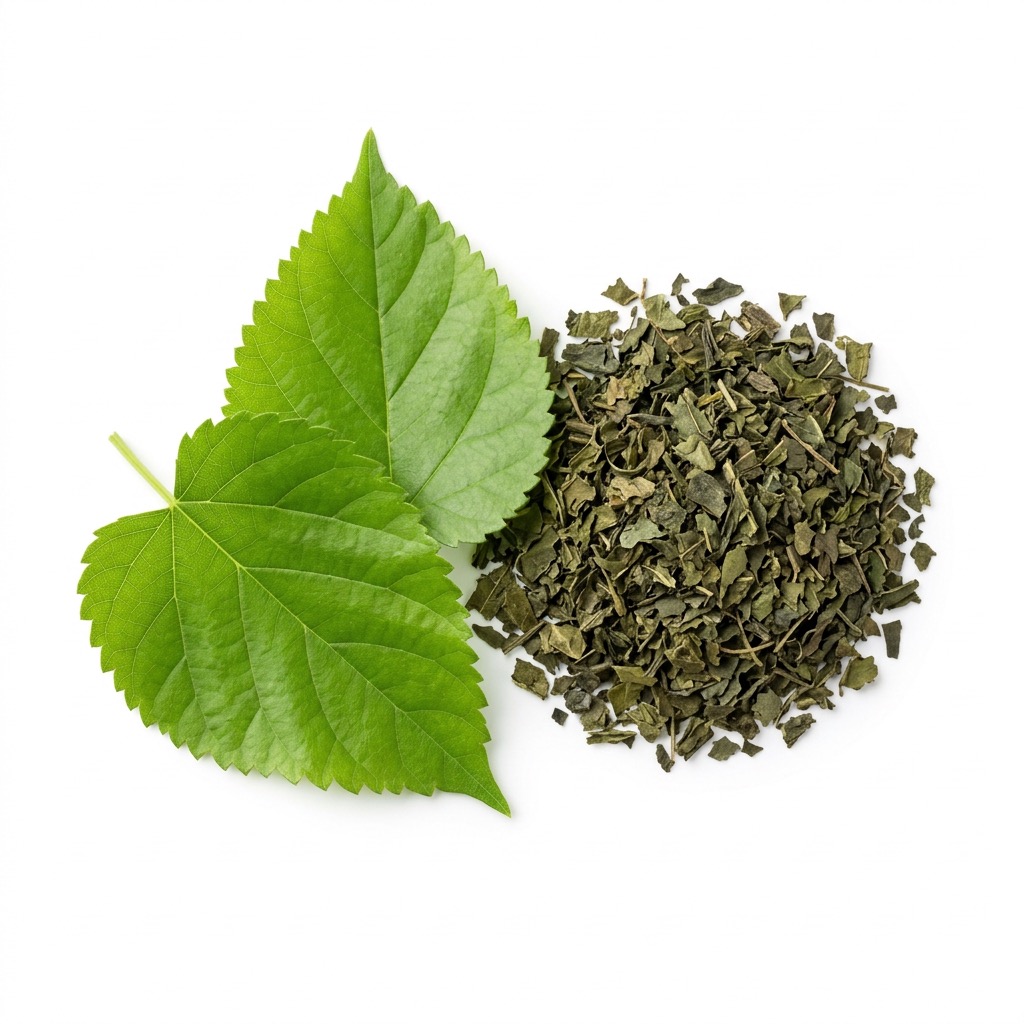
Mulberry Leaf · Morus alba
Herbs & Plants
Mulberry Leaf
Morus alba
Long before it became a herbal tea, cooked young mulberry leaves were used in Asian traditional practice for centuries.
Benefits
mulberry leaf slows the digestion of some dietary carbohydrates before they are converted into glucose
its natural compounds help moderate the activity of enzymes that break down starches and sugars
polyphenols and flavonoids help protect cells from oxidative stress
its tannins and plant compounds contribute to a balanced digestive response when used as a tea or food supplement
They will see the photograph and what it helps with.
Why they work
a naturally occurring iminosugar that blocks the enzymes in the small intestine which break complex carbohydrates down into glucose
plant compounds that support antioxidant defenses and help regulate cellular inflammatory signaling
astringent compounds that contribute to mulberry leaf's bitter taste and digestive activity
adds bulk and slows the release of carbohydrates during digestion
How to use it for the specific effect
drink mulberry-leaf tea with or shortly before a meal, or use a standardized leaf product according to its serving instructions
steep dried mulberry leaves in hot water for several minutes and drink as a tea
begin with a small serving, especially if you are not accustomed to bitter herbal teas or concentrated leaf extracts
use young, properly identified leaves in teas or prepared foods rather than eating large amounts of raw leaf
Key active compounds
the principal compound behind mulberry leaf's effect on carbohydrate-digesting enzymes
flavonoids that contribute to the leaf's antioxidant profile
a polyphenol involved in carbohydrate and antioxidant activity
a flavonoid glycoside supporting vascular and cellular antioxidant defenses
astringent polyphenols contributing to the leaf's flavor and digestive properties
Caution
use products clearly identified as Morus alba or another documented edible mulberry species, and do not collect leaves from an unknown tree.
How we chose it to buy online
We check every product so you don't have to. A mulberry leaf only makes our list if:
- Correct botanical identity — clearly labeled as mulberry leaf, with the species identified as Morus alba
- Leaf-only ingredient — contains the leaf rather than an unspecified blend of fruit, bark, root, or stem
- States its DNJ content — concentrated products give a verified figure or a transparent extraction specification
- Low-contaminant sourcing — tested for pesticides, heavy metals, microbial contamination, and other agricultural residues
- No unnecessary additives — avoids undisclosed sweeteners, fillers, dyes, and proprietary blends
- Traceable processing — identifies the growing region, harvest practices, batch number, and testing information
If no product meets these standards, we don't list one. No exceptions for affiliates.
See our picks
Some of these are affiliate links. If you buy through one we may earn a commission, at no extra cost to you.