sana › Seeds & Nuts › Walnuts
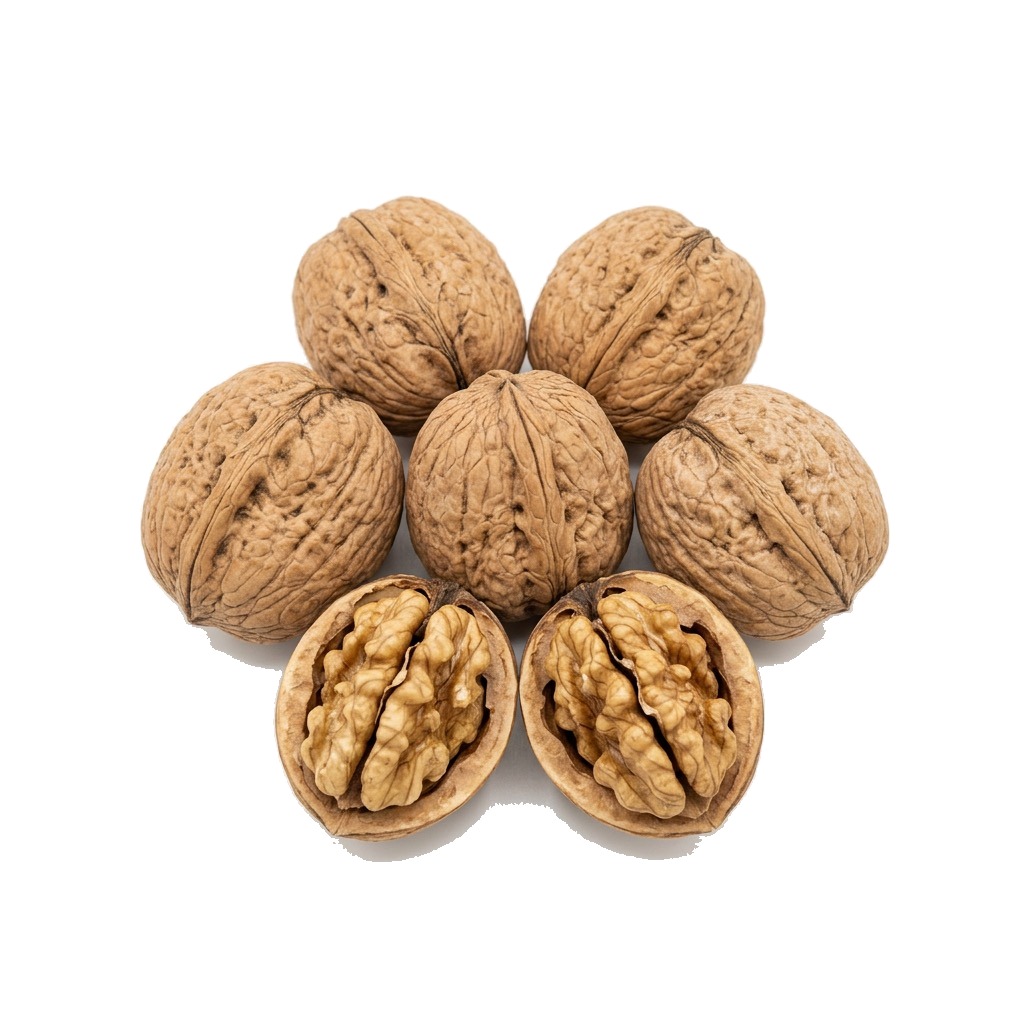
Walnuts · Juglans regia
Seeds & Nuts
Walnuts
Juglans regia
The Romans called it Jovis glans, Jupiter's acorn, which became Juglans. The species name regia means royal.
Benefits
unsaturated fats, plant sterols, and alpha-linolenic acid help support healthy cholesterol levels and normal blood-vessel function
omega-3 ALA, polyphenols, and vitamin E help protect nerve cells from oxidative stress and provide fats needed for normal brain structure
fiber helps add bulk to the diet and provides material for beneficial gut bacteria
walnut polyphenols and unsaturated fats interact with cellular pathways involved in inflammatory signaling
They will see the photograph and what it helps with.
Why they work
a plant-based omega-3 fatty acid that supports cell membranes and cardiovascular function
including linoleic acid, which contributes to normal lipid metabolism and vascular health
the compounds in the walnut skin are not used by the body directly. Helpful bacteria must change them first, and not everyone carries the ones that do it, so the same walnuts do more for some people than for others
compounds that compete with dietary cholesterol during intestinal absorption
support digestive regularity and a slower release of energy from meals
How to use it for the specific effect
eat a small handful, about 28 g or 1 ounce, as a snack or add walnuts to oatmeal, yogurt, salads, or cooked vegetables
use walnuts regularly in place of foods higher in saturated fat rather than simply adding them to an already rich diet
begin with a smaller portion if your diet is low in fiber, and drink enough water throughout the day
choose raw or dry-roasted walnuts without added sugar or heavy salt, and eat them as they are
Key active compounds
plant-based omega-3 fatty acid supporting cardiovascular and cellular function
natural plant compounds in the thin brown skin, which gut bacteria break down into the form the body can use
a fat-soluble nutrient that helps protect cell membranes from oxidative damage
compounds that support healthy cholesterol absorption patterns
present in small amounts, which is unusual for a food
Caution
do not substitute black walnut hull or leaf products for ordinary edible walnuts; they are different preparations with different safety considerations.
discard walnuts that smell paint-like, bitter, or rancid, or show visible mold.
How we chose it to buy online
We check every product so you don't have to. A walnuts only makes our list if:
- Correct species — clearly identified as edible English or Persian walnut, Juglans regia
- Kernel quality — kernels are whole or intact, without excessive darkening, moisture, or visible mold
- Fresh packaging — packed in an airtight, light-protective container with a harvest, packaging, or best-before date
- Minimal processing — raw or dry-roasted, without unnecessary sugar, oils, flavorings, or heavy salt coatings
- Origin and storage information — provides the growing region and recommends refrigeration or another method that helps prevent rancidity
- Allergen transparency — clearly identifies tree-nut ingredients and possible cross-contact in the facility
If no product meets these standards, we don't list one. No exceptions for affiliates.
See our picks
Some of these are affiliate links. If you buy through one we may earn a commission, at no extra cost to you.