sana › Roots & Spices › Ashwagandha
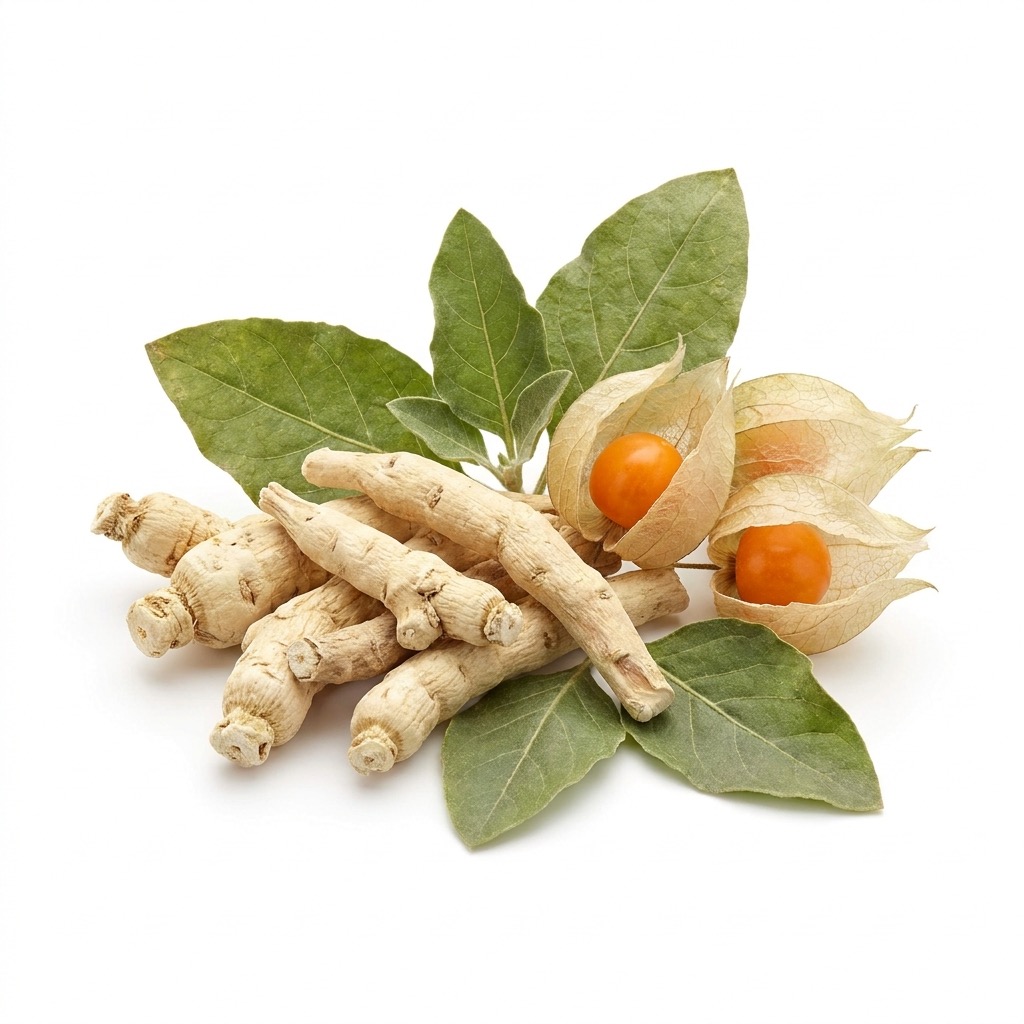
Ashwagandha · Withania somnifera
Roots & Spices
Ashwagandha
Withania somnifera
Somnifera means sleep-bringing. The plant is a nightshade, a cousin of the tomato and the potato, and the part used is the root, dug up and dried.
Benefits
traditionally used as a restorative herb during periods of mental and physical strain, and it supports a more balanced stress response
may help promote easier relaxation and more consistent sleep quality
withanolides interact with pathways involved in muscle function, energy use, and exercise recovery
traditionally used to support sexual vitality and aspects of sexual well-being
They will see the photograph and what it helps with.
Why they work
steroidal lactones that influence cellular stress, inflammatory, and nervous-system signaling pathways
ashwagandha acts on the loop between the brain and the adrenal glands that governs the stress response, helping the body answer stress without supplying any hormone itself
chronically raised stress hormone drives poor sleep and impaired recovery, so calming that one loop explains effects that look unrelated
its compounds influence the calming pathways involved in relaxation and sleep
root compounds help protect cells from oxidative stress during normal metabolic and physical activity
How to use it for the specific effect
take a standardized root extract with food, preferably in the afternoon or evening if it makes you feel calm or sleepy
take it consistently in the evening rather than taking a large amount only occasionally
take a clearly measured root preparation daily according to the product's instructions
choose a root-only extract or a clearly labeled root-and-leaf preparation so the plant material is known
Key active compounds
the characteristic steroidal lactones responsible for much of ashwagandha's biological activity
a withanolide found in the plant, particularly relevant to concentrated extracts
naturally occurring compounds associated with the root's stress-response activity
additional plant compounds contributing to ashwagandha's broader cellular profile
Caution
rare liver injuries have been reported with ashwagandha products; stop taking it if your skin or eyes turn yellow, or if dark urine, unusual itching, severe fatigue or persistent abdominal discomfort develops.
ashwagandha can push thyroid hormone levels up.
How we chose it to buy online
We check every product so you don't have to. An ashwagandha only makes our list if:
- Correct botanical identity — clearly labeled as Withania somnifera
- Transparent plant part — specifies whether the product contains root, leaf, or both; root-only products are preferred for this page
- Standardized withanolide content — provides a verified withanolide percentage or clearly identifies the extract composition
- No proprietary blend — lists the exact amount of ashwagandha per serving
- Third-party tested — independently verified for identity, heavy metals, pesticides, microbial contamination, and adulteration
- Clear extraction details — identifies whether the product is a whole-root powder, water extract, or another preparation
If no product meets these standards, we don't list one. No exceptions for affiliates.
See our picks
Some of these are affiliate links. If you buy through one we may earn a commission, at no extra cost to you.