sana › Herbs & Plants › Chamomile
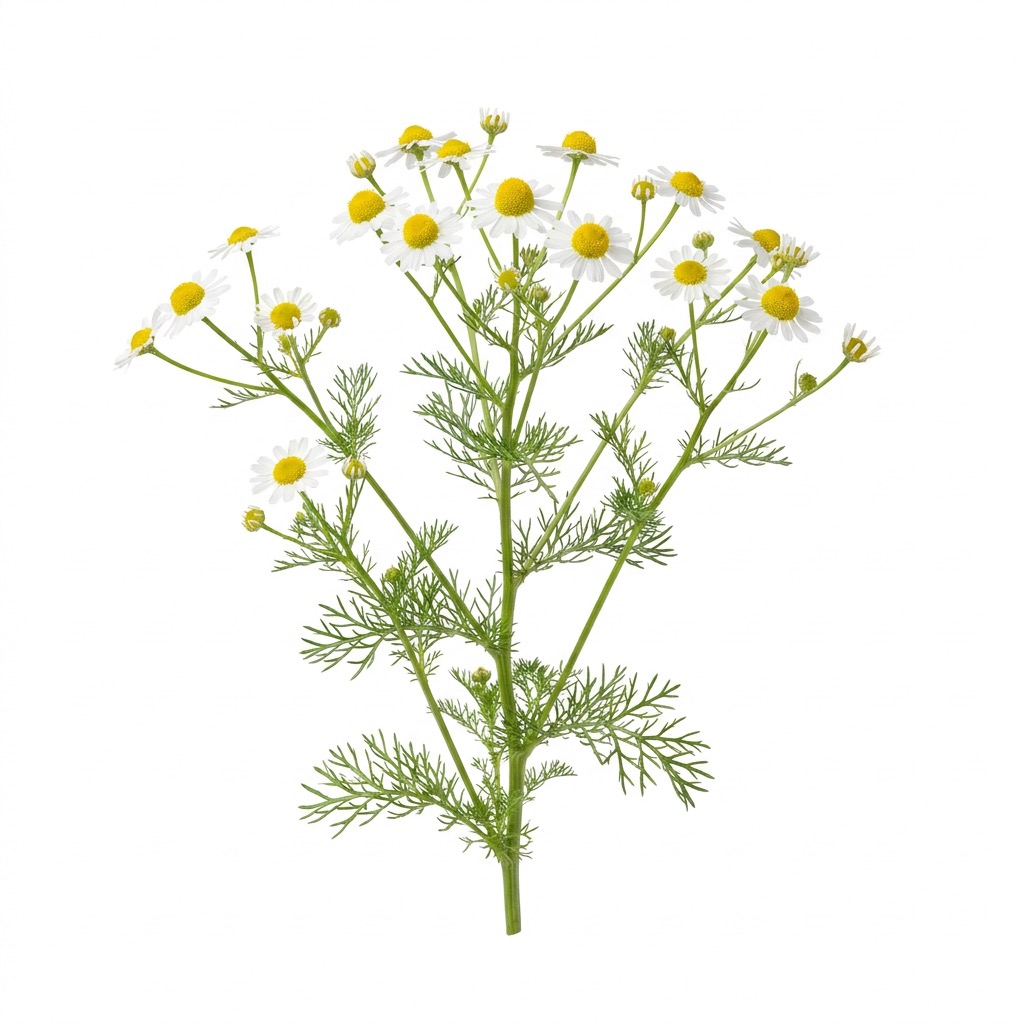
Chamomile · Matricaria chamomilla
Herbs & Plants
Chamomile
Matricaria chamomilla
One of the most-studied medicinal herbs there is, used in Egyptian, Greek and Roman medicine long before anyone knew what was in it.
Benefits
chamomile's aromatic compounds help settle nervous-system activity and create a calming evening ritual
its bitter and aromatic compounds help relax digestive smooth muscle and ease occasional gas, bloating, and stomach tension
properly prepared chamomile provides a gentle topical option for temporary redness and surface discomfort
chamomile's flavonoids and volatile oils help relax smooth muscle associated with occasional menstrual cramping
They will see the photograph and what it helps with.
Why they work
a flavonoid that binds to calming receptors in the brain, contributing to chamomile's relaxing and sleep-supportive effects
volatile compounds that support a balanced inflammatory response and contribute to topical skin comfort
including luteolin and quercetin, which provide antioxidant activity and help regulate inflammatory signaling
stimulate sensory and digestive pathways involved in normal gastrointestinal function
How to use it for the specific effect
prepare chamomile flowers as a tea and drink in the evening
drink a cup after a meal or when occasional bloating or stomach tension occurs
apply a cooled, well-strained infusion or a properly formulated chamomile product to intact skin
use only a sterile, properly prepared product; avoid placing loose plant material or homemade liquid directly in the eyes
Key active compounds
a flavonoid associated with chamomile's calming properties
a volatile compound contributing to skin-soothing and digestive activity
an aromatic compound formed during distillation and associated with chamomile's characteristic blue essential oil
flavonoids supporting antioxidant and inflammatory signaling pathways
naturally occurring aromatic compounds present in chamomile flowers
Caution
avoid chamomile if you are allergic to ragweed, chrysanthemums, marigolds, daisies, or other plants in the same family.
How we chose it to buy online
We check every product so you don't have to. A chamomile only makes our list if:
- Correct botanical identity — clearly identifies German chamomile as Matricaria chamomilla or Matricaria recutita, or Roman chamomile as Chamaemelum nobile
- Flower heads as the plant part — specifies flowers rather than an unspecified chamomile blend
- Fresh, aromatic material — provides a harvest or packaging date and protects the flowers from light and moisture
- No unnecessary additives — contains chamomile as the primary ingredient without undisclosed flavorings, fillers, or dyes
- Third-party tested — independently verified for identity, pesticides, heavy metals, microbial contamination, and adulteration
- Clear extract details — lists the extraction method and concentration when the product is an extract rather than a simple dried-herb tea
If no product meets these standards, we don't list one. No exceptions for affiliates.
See our picks
Some of these are affiliate links. If you buy through one we may earn a commission, at no extra cost to you.